Done-for-you B2B outbound
High-ticket clients on your calendar. Done for you.
What we take off you
- Prospecting
- We research the ICP target accounts and verify them.
- AI Workflows & enrichment
- Every contact enriched with a dated reason and verified before it's used.
- Real conversations
- Emails, LinkedIn actions and quick phone calls to the warm ones.
- GTM infrastructure
- Domains, mailboxes, warmup, deliverability, CRM.
One flat monthly fee, quoted on the call once we know your market. Cancel any time. Domains, data, tooling and AI costs are all inside the number.
50–200
meetings a month, by plan
8%
reply rate we work to
0
hours from your team
What we plan against. Your market and deal size move these numbers — we’ll say by how much on the first call.
Why most outbound never books anything
“People underrate the importance of outsourcing the extra workload. Braveokays has been a great partner in helping us scale our outbound.”

Arujeet
Sales Head, Muzero
You could be our next happy client — while we close deals for you.
01The problem
Sending more stopped working around 2024.
Inbox providers got better at spotting bulk mail, and buyers got faster at deleting it. The response was to send even more, which made both problems worse.
We still start with a big number — you can’t hit a target from a list of fifty. What makes it work is how much gets thrown away before anything sends: most accounts dropped, every remaining contact enriched with a real reason and verified before it’s written to.
Volume is the input. The cut is the strategy.
One month, worked through
- 20,000
Monthly Prospects
Read by a model across every public source. This is the one line AI genuinely changes.
- 10,000
Qualify leads with AIEnriched and verified
AI researches the scoring and drops the other 10,000. Most lists should die here and almost none do.
- 600
Got Replies4–8% of contacts
The first number that means anything. A researched sequence lands 4–8%. A generic blast lands under 1%.
- 40-50
Meetings bookedpositive replies
Calls to the warm-but-quiet ones are what turn a reply into a date in the diary.
What the numbers tell you
- Two lines are worth reporting: conversations started and meetings held. Sends, opens and clicks are noise.
- Enrichment and verification are the difference between 5% and 0.5%. Unverified contacts bounce and cost you the domain; unenriched ones get ignored.
- You cannot fix a bad reply rate by sending more. You fix it by writing to different people.
- AI changes the cost of reading 20,000 accounts. It does not make a bad list reply.
- Deal size decides whether any of this is worth doing. Under ~$2k a year of contract value, the arithmetic rarely works.
The full version of this, including how to adapt it to your deal size, is in the playbook.
02What we do differently
We research first. Everything else is downstream of that.
Before a single email is written, a Claude Opus-class model reads each account — site, job ads, LinkedIn posts, funding news, press — and scores it against the same six checks, citing a source for each one. Then a person reads the reasoning and cuts. Accounts that fail a hard filter are dropped — not softened, not “kept warm”. Dropped.
An ICP is a filter, not a description.
The six checks, in order
- 01
Problem evidence
Hard filterIs there proof this company has the problem you solve?
Looks like: Job ad for a role that exists only because the problem exists.
- 02
Budget reality
Hard filterCan they spend your price without a board meeting?
Looks like: Headcount and funding stage that match your existing customers.
- 03
Reachable buyer
Hard filterCan you name the person, not just the job title?
Looks like: A named Head of Ops with a verified work address.
- 04
Timing trigger
Strong signalDid something change in the last 90 days?
Looks like: New exec hire, funding, office opening, product launch, migration.
- 05
Stack fit
Strong signalDo they run the tools that make you easy to adopt?
Looks like: Detected CRM, cloud provider or billing system.
- 06
Lookalike proximity
Tie-breakerHow close are they to your three happiest customers?
Looks like: Same segment, same size band, same buying committee shape.
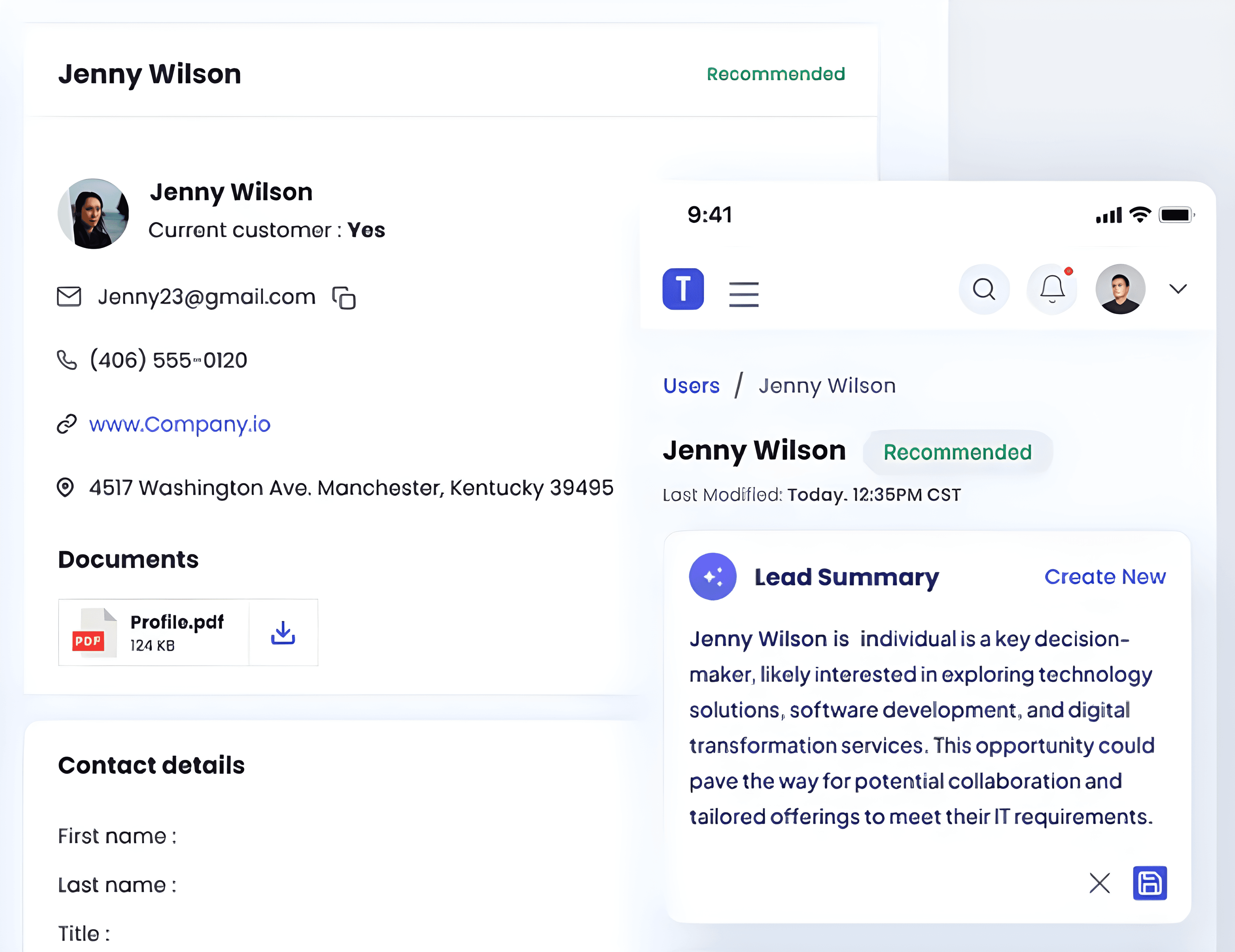
Personalisation is not a first name. It's a reason.
The question a cold email has to answer is 'why are you writing to me, today?'. A merge tag doesn't answer it. A change inside their business does. So we read across everything they publish — posts, job ads, funding news, press, product pages — and we only write when we've found a dated change.
03AI and people
AI reads. People decide.
Reading eight sources on six hundred accounts a month is not something a small team does well, and it is exactly what a current-generation Claude Opus model is good at. So the model does the reading, the scoring and the first draft. A person owns the filter, the final wording and every single reply. That split isn't caution for its own sake — it's the same conclusion Close's 2026 AI-in-sales panel reached: treat AI as an assistant rather than a source of truth, and never fully outsource customer contact.
The long version, including the prompts and where the model gets it wrong, is in chapter four of the playbook.
The lines we don’t cross
Published so you can hold us to them.
- No prospect on your list ever talks to a bot — not in email, not on LinkedIn, not on the phone.
- Nothing sends on model output alone. A person approves every sequence before it goes live.
- No claim goes into an email without a source we can link to. Model summaries get checked, because they invent quotes convincingly.
- No AI voice agents dialling your market. We call warm prospects, and the person who wrote the email makes the call.
- AI cadence gets edited out. Em-dash-heavy, uncanny, hyper-specific copy damages trust faster than a plain email ever would.
What the AI costs you
Model usage, enrichment credits, data, verification and the dialer all sit inside the retainer. We don't bill AI through as a line item, and there's no per-account research fee — the tooling is our cost of doing the work, not yours.
04Who does the work
You're hiring a team, not a tool.
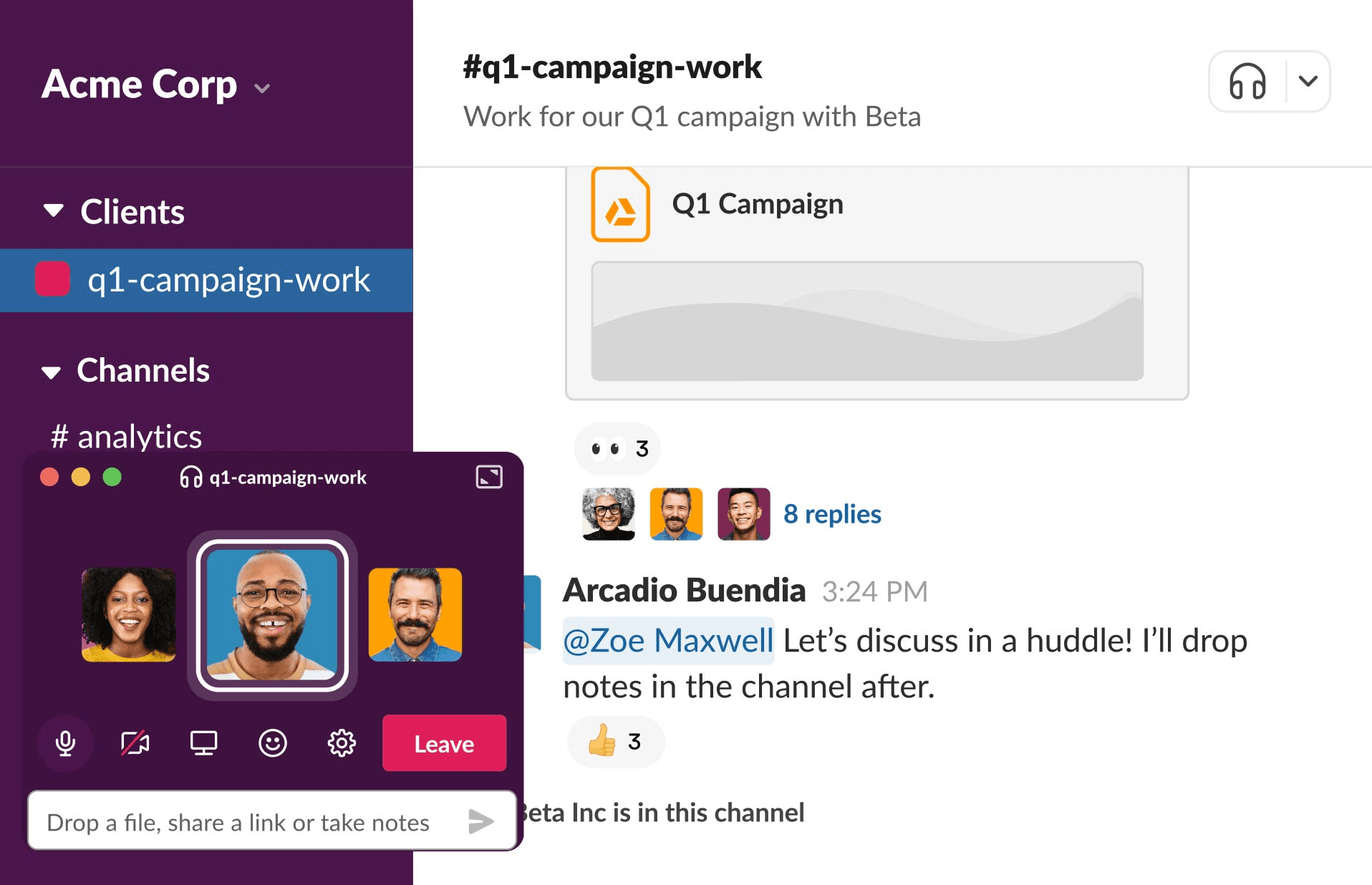
There's no dashboard to learn and no account manager relaying messages. The people who research your accounts, write your sequences and answer your replies are the same people sitting in your Slack channel. Ask something on a Tuesday afternoon and one of them answers that day.
The people on your account
- A
Ayush
FounderTakes your first call, runs the ICP workshop in week one, and signs off the messaging before anything goes live.
In your channel from day one
- R&
Research & qualification
List reviewed before each buildAudits what the model scored, cuts the accounts that don't hold up, and checks that every angle has a date and a source behind it.
- C&
Copy & sequences
You approve before anything sendsRewrites every draft in your voice, segment by segment, and bins anything that still reads like a model wrote it.
- R&
Replies & phone
Replies handled within hoursAnswers every reply personally and calls the warm ones. The person who wrote the email is the person who makes the call.
- D
Deliverability
Checked every week, reported either wayOwns the domains, warmup, authentication and volume caps, and pulls sending back the moment a number starts drifting.
You meet whoever will be running your account on the first call.
What founder-led actually means here
- The people running your campaigns are in your Slack channel. There's no account manager in between.
- No call centre, no rotating pool of juniors, and no handoff to a different team once you've signed.
- Every reply and every call comes from someone who has read the research on that account.
- We'd rather turn work away than take on more accounts than we can research properly.
Compared with hiring an SDR
Not a criticism of in-house teams — plenty of companies should build one. It’s a different purchase, and these are the differences that tend to matter in the first year.
05The process
Five stages. You can see all of them.
Open any stage to read what actually happens inside it. There is no step we’d rather you didn’t look at.
Stage one takes the longest and produces nothing visible. That is the part worth being patient with.
- 01
Prospecting
We do this
AI reads every account. A person decides which ones survive.
What happens inside this stage
We start from your ICP, not from a database export. A Claude Opus-class model reads each account across its site, job ads, LinkedIn posts, funding news and press coverage, then scores it against the fit criteria we agree in week 1 — size, stack, region, buying trigger — with a source cited per check. A person reviews the reasoning and cuts. We'd rather send 4,000 researched emails than 40,000 blind ones.
- ICP workshop before a single email goes out
- Every account scored against agreed criteria, with a citation per check
- Buying signals tracked across posts, job ads, news and funding
- A person signs off the list — the model never has the final say
- 02
Research & verification
We do this
Every contact is verified and every angle is dated.
What happens inside this stage
Contacts are verified before send, so bounces stay low and your domain stays clean. Then we work out the actual reason this person should care right now — a hire, a funding round, a post they wrote last week, a job ad that gives away their roadmap. If the angle can't be dated and linked to a source, it doesn't get used.
- Contacts verified before send to keep bounce rate low
- A dated, sourced reason-to-reach-out per prospect
- No merge-tag personalisation dressed up as research
- SPF, DKIM and DMARC configured and monitored
- 03
Multichannel sequences
We do this
Email and LinkedIn, sent at volumes your domain survives.
What happens inside this stage
Sequences run across email and LinkedIn together, so a prospect sees you more than once without being hammered in a single inbox. Drafts come out of the research; a person rewrites them in your voice and approves the sequence before it goes live. Sending volume stays inside what a warmed domain can carry — that's the whole point of qualifying first.
- Email and LinkedIn working the same prospect in sync
- Copy drafted from the research, then rewritten and approved by a person
- Send volume kept inside safe per-mailbox limits
- Deliverability watched weekly, not at the end of the quarter
- 04
Replies & the phone nudge
We do this
A human reads every reply. We call when a deal needs it.
What happens inside this stage
Every reply is read and answered by a person — no auto-responder, no AI persona. When someone's warm but stalling — opened four times, never replied, or went quiet after showing interest — we pick up the phone. That call is usually what turns a maybe into a meeting.
- Every reply written by a human, not an auto-responder or a bot
- Objections answered properly, not deflected
- Phone calls to warm-but-quiet prospects
- Anything out of scope escalated to you in Slack
- 05
Booked meetings
Together
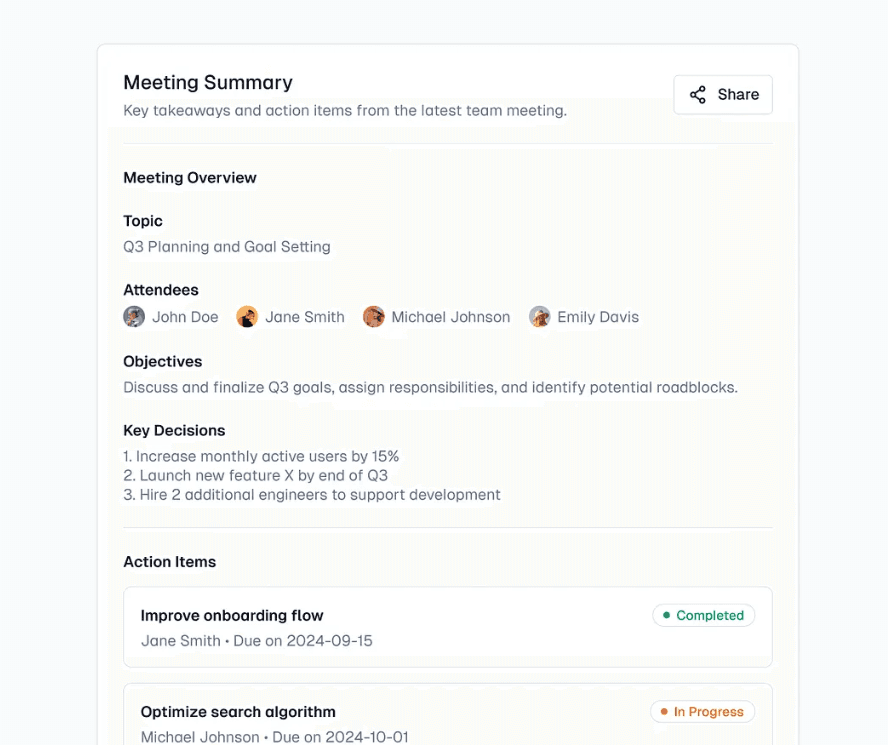
It lands on your calendar with a brief attached.
What happens inside this stage
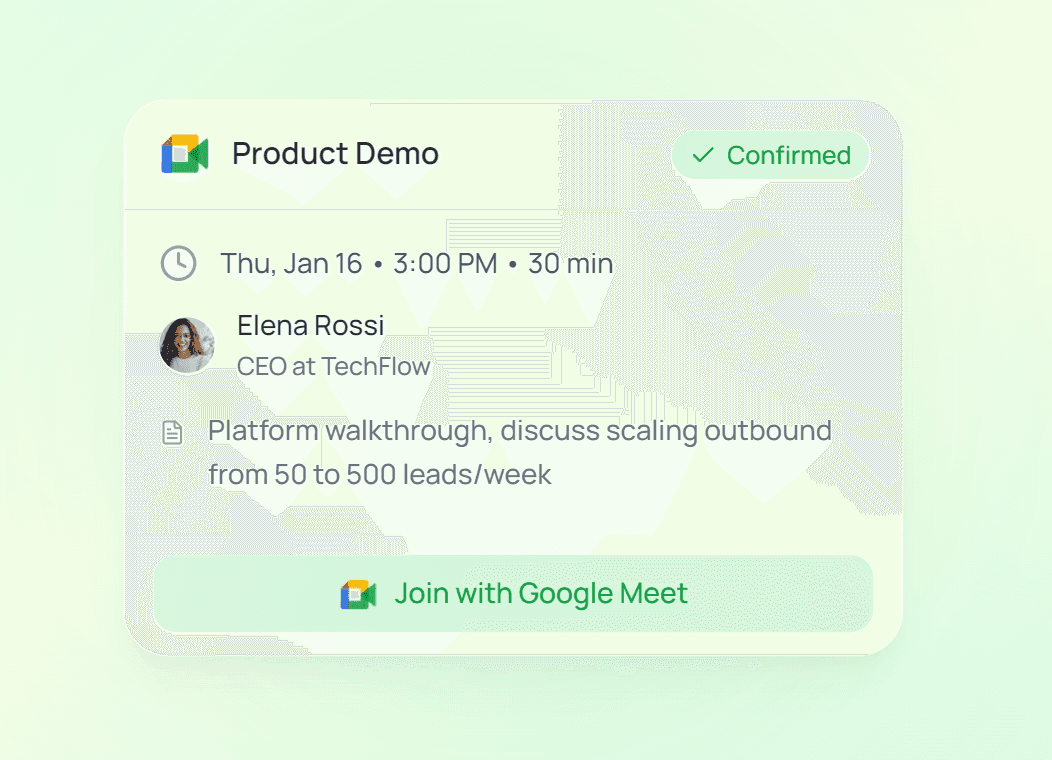
We book straight into your calendar and send you a short brief before the call — who they are, what they said, why they're interested and what they'll likely push back on. You show up and sell. That part stays yours.
- Meetings booked directly into your calendar
- A prep brief before every single call
- No-shows chased and rebooked by us
- You run the call — we don't pitch your product for you
Want the version with the checklists in it? Read the playbook.
06The channels
Three channels, working on the same person.
Not three separate campaigns. One prospect sees an email, recognises the name on LinkedIn a few days later, and gets a call only if they’ve already shown interest.
Researched, specific, and sent at a volume your domain can carry. We run the infrastructure — domains, mailboxes, warmup, authentication — and we keep it clean.
- Dedicated domains, never your primary
- Warmed mailboxes with capped daily volume
- SPF, DKIM and DMARC set up properly
- Bounce and spam rates reviewed every week
Running alongside email so your name is familiar before the ask. It's also where the best angles come from — what your buyer posts and comments on tells you more than any database field. Connection requests, profile visits and messages, paced like a person rather than a bot.
- Paced to stay inside platform limits
- Sent from your team's profiles, warmed first
- Their posts and comments read before we write anything
- Timed against the email sequence, not random
Phone
The closerNot a call centre, not an AI voice agent, and not a dial-everyone campaign. We call the prospects who've already shown interest but haven't committed — the extra nudge that books the meeting.
- Only warm prospects who've already engaged
- Calls made by the people who wrote the emails
- Used to book meetings and unstick stalled deals
- Notes from every call land in your Slack channel
07Where we send
20 markets, 9 regions.
Sending times, language and compliance change per region. So do the rules we send under. Scroll across — nothing here moves on its own.
North America
2 United States
 Canada
UK & Ireland
2 United Kingdom
 Ireland
DACH
3 Germany
 Switzerland
 Austria
Western Europe
2 Netherlands
 France
Southern Europe
2 Spain
Spain Italy
Italy
Nordics
3 Sweden
 Denmark
 Norway
Middle East
2 United Arab Emirates
 Saudi Arabia
APAC
2 Singapore
 India
India
ANZ
2 Australia
 New Zealand
Not on the list? Ask. We’ll tell you honestly whether we can reach it well.
08What you get
Six things arrive. That’s the whole list.
No dashboard you have to learn, no quarterly business review. Work, numbers, and a channel where you can ask questions.
A shared Slack channel
Not a ticket queue and not a monthly call. You're in a channel with the people actually running your campaigns — ask a question, get an answer the same day.
Weekly reporting
Prospects contacted, replies, meetings booked, deliverability health. Sent every week whether the numbers are good or bad.
A brief before every meeting
Who they are, what they said, why they're interested, and what they'll probably push back on. You walk in knowing the context.
You own everything
Domains, mailboxes, contact data, copy, call notes and the research behind every account. If we stop working together, it all stays with you. Nothing is held hostage.
Infrastructure and tooling handled
Domains bought, mailboxes created, warmup run, authentication configured, dialer set up, enrichment and AI research running. You don't touch any of it, and none of it is billed separately.
Lead Catcher, free
See which companies are visiting your website, and let that warm intent feed straight back into who we prospect next.
The same job, done two ways
The left column isn’t a strawman. It’s the standard playbook, and it’s what most outbound looks like right now.
Know which companies are on your website
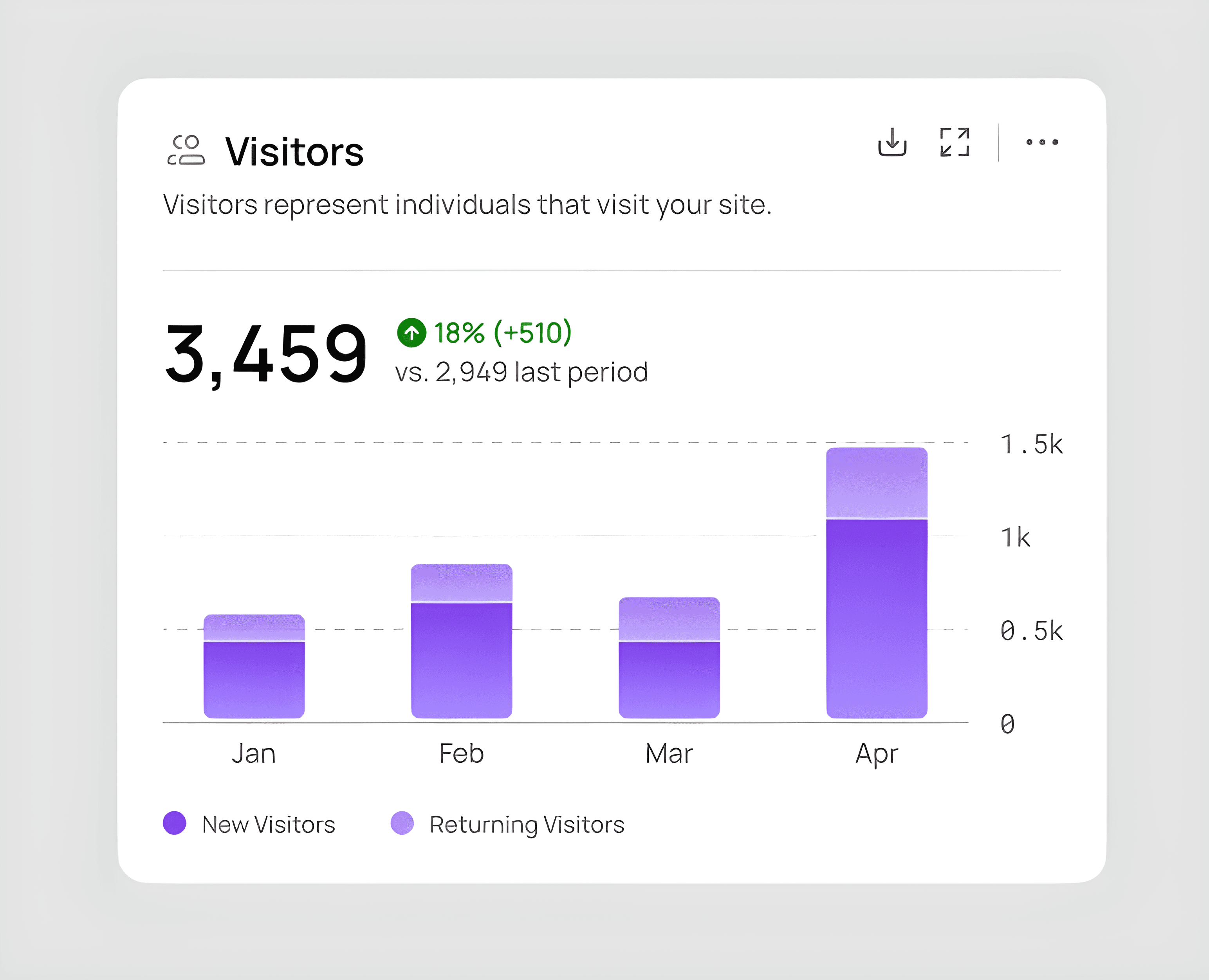
Most of the people researching you never fill in a form. Lead Catcher identifies the companies visiting your site and what they looked at, so a warm account gets prioritised in prospecting instead of sitting anonymous in your analytics.
- Identifies the company behind anonymous website visits
- Shows which pages they read and how often they came back
- Warm accounts get pushed to the front of the prospecting queue
- Yours to keep and use, at no extra cost
A repeat visit is the warmest signal there is. Why that matters
09What to expect, and when
Week one produces nothing. On purpose.
Mailboxes need two to three weeks of warmup before they can carry real volume. Skipping that is how agencies get you results in week one and dead domains by week six.
Judge it at day 45
Week 1
Setup and the ICP workshop
We sit down with you, pin down exactly who we're going after and why they'd care. Meanwhile domains get bought, mailboxes get created and warmup starts. Nothing gets sent this week — that's deliberate.
Slack channel opens
Week 2
Research, then the first sends
The first qualified list is built: the model reads every account and scores it, we cut the ones that don't hold up, and the surviving accounts each get a dated angle. Email and LinkedIn sequences go live at low volume while we watch how the domain behaves and how the market responds.
First sequences live
Weeks 3–4
First replies and first meetings
Replies start landing and we start calling the warm ones. First meetings usually get booked in this window. Copy gets rewritten based on what's actually landing, not what we guessed.
First meetings booked
Month 2
Volume up, messaging locked
By now we know which segments and which angles work. Sending volume scales up on the warmed infrastructure and the meeting rate becomes predictable rather than lucky.
Volume scales up
Month 3+
A steady pipeline
This is where the engagement should be running at the number your plan is built for. If you're consistently past it, that's the conversation about moving up — and if you're well short, that's a conversation too.
Your plan's number
Results vary by industry, product and price point. We'll tell you honestly what to expect for yours on the first call.
10The open playbook
The whole process is written down. Take it.
The checklists, the rates, the email structure, the sending limits, the reply scripts. Not a summary of them — the actual ones we use.
We publish it because outbound isn’t hard to understand, it’s hard to do consistently. If you read this and run it yourself, good. If you’d rather not spend your week on it, that’s what we’re for.
Twenty minutes. We’ll tell you if this fits.
Bring your ICP and your average deal size. We’ll run the maths on the call and say plainly whether outbound can hit your number — including when it can’t.
Results vary by industry, product and price point. We'll tell you honestly what to expect for yours on the first call.